
tonnes “Power highways” push forward carbon emission reduction in China
-- China has built a massive power network often termed "power highways" to transmit electricity from its resources-rich west to the more developed, power-thirsty east.
-- As the country is striving to meet its carbon commitment to peak carbon emissions before 2030 and achieve carbon neutrality before 2060, the power highways have seen increasing transmissions of electricity generated by green energy.
-- The trend of green power transmission is set to continue as China keeps up its capacity of clean and renewable power generation.
YINCHUAN/XINING, Oct. 13 (Xinhua) -- On the western fringes of Maowusu, a major desert in northern China, rows of power towers stand on an area of about 26.7 hectares.
Every day, nearly 100 million kWh of electricity is transmitted from the facilities to the eastern coastal city of Qingdao about 1,300 km away.
The infrastructure is part of China's massive power network often termed "power highways," built to transmit electricity from its resources-rich west to the more developed, power-thirsty east.
The power highways use ultra-high-voltage (UHV) transmission, the world's most advanced power transmission technology. China is the first country to fully grasp the UHV technology and put it into commercial use.
文章插图
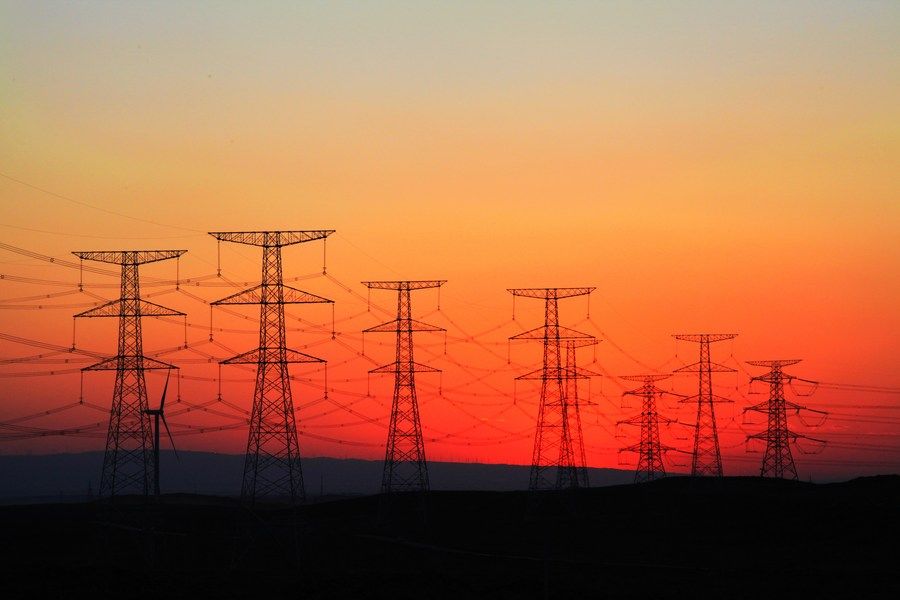
File photo shows facilities of the Yindong ±660kV high-voltage direct current (HVDC) transmission project at sunset in northwest China's Ningxia Hui Autonomous Region. (Xinhua)
As the country is striving to meet its carbon commitment to peak carbon emissions before 2030 and achieve carbon neutrality before 2060, the power highways have seen increasing transmissions of electricity generated by green energy.
In 2020, China's 22 UHV power lines delivered 531.8 billion kWh of electricity, of which 244.1 billion kWh were generated from renewable energy sources, accounting for 46 percent of the total, according to a July report released by the National Energy Administration.
China's northwestern region is not only rich in fossil fuels but boasts abundant clean energy resources such as solar and wind power. The large areas of desertification land also provide space for developing power generation facilities.
In recent years, the new energy industry has experienced explosive growth in the region.
Northwest China's Ningxia Hui Autonomous Region is an important supplier of the west-to-east power transmission program. Over the past 10 years, the installed capacity of Ningxia's new energy power generation has increased 29 times from 850,000 kW to 25.74 million kW, local statistics showed.
文章插图
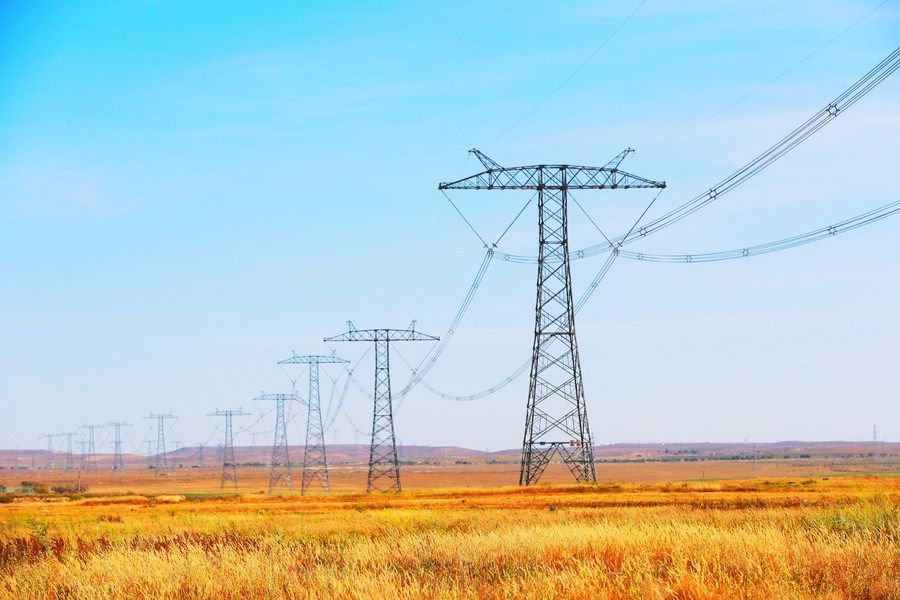
Photo taken on Oct. 19, 2020 shows facilities of the Lingzhou-Shaoxing ±800kV high-voltage direct current (HVDC) transmission project in northwest China's Ningxia Hui Autonomous Region. (Xinhua)
In the northwestern province of Qinghai, the amount of electricity produced using new energy resources has accounted for 61 percent of the total installed capacity, official data showed.
In December last year, the world's first UHV power line dedicated to transmitting clean electricity was put into operation in the province, stretching over 1,500 km from Qinghai all the way to central China's Henan Province. So far, the line has delivered more than 16 billion kWh of clean electricity to other parts of China.
"The electricity transmitted through the line in one second is enough to meet an average household's demand for two years," said Li Binshan, head of the Qingnan converter station at the origin of the power line.
At full capacity, the line can deliver 40 billion kWh of electricity generated by clean and renewable energy annually to regions including central China. It is equivalent to that produced by 18 million tonnes of raw coal, cutting 29.6 million tonnes of carbon dioxide.
以上关于本文的内容,仅作参考!温馨提示:如遇专业性较强的问题(如:疾病、健康、理财等),还请咨询专业人士给予相关指导!
「辽宁龙网」www.liaoninglong.com小编还为您精选了以下内容,希望对您有所帮助:- 气质 “气质校花”陈都灵,穿红色蕾丝裙秀美腿,气场冷艳又迷人
- 张静初 张静初终于放“大招”,穿蕾丝礼服明艳动人,长发盘起更减龄
- 设计 今年火了一种“叠穿”穿法:马甲+内搭,新潮时髦又能降低撞衫率
- 同时又 女人过了30岁,入手这3条“收腰裙”,显瘦还有女人味,优雅高级
- 黑色 窦靖童也太潮了吧,剪“三毛头”穿印花裤,个性张扬太像王菲
- 那大 穿裙子or裤子,搭配这件“内搭”,温柔有气质,撞衫也不怕
- 鞋码 小学六年级要穿44码!温州“大脚娃”越来越多,爸妈发愁
- 西装 过年流行一种裤子,叫“裤腿盖过鞋”!显瘦时髦,50、60岁穿更美
- trap 外国游客在中国疯抢“国产跑鞋”,遭国人吐槽,外国人带回国长脸!
- 设计 穿大衣,到底配“卫衣”还是“衬衫”?时尚博主告诉你这两者区别